Short answer: Dropshipping is legal in the UAE as long as you trade under a licence that allows online selling. The main routes are Dubai’s e-Trader licence (aimed mainly at UAE and GCC nationals), a free zone e-commerce licence, which most expatriates choose, and a mainland licence. Confirm current rules with the authority before you commit.
“Is dropshipping legal in the UAE?” is one of the most searched questions about e-commerce here, and the answer is simple: yes, it’s legal, as long as you trade under a licence that allows online selling. What isn’t simple is choosing the right licence, because there are several routes and the best one depends on who you are and how you plan to grow.
I’m a web designer and developer, not a lawyer or a business setup consultant, so treat this article as a clear map rather than legal advice. I’ve helped many clients launch online stores, and these are the options and questions that come up every time. Before you commit, confirm the current rules with the authority or free zone you choose, because fees, eligibility and permitted activities change.
Why the licence matters for a dropshipper
It’s tempting to start selling through an Instagram page and sort out the paperwork later. The problem is that almost every tool a serious store needs asks for a trade licence. Payment gateways need it before they’ll approve your account. Couriers that collect cash on delivery usually need it before they’ll open a business account. Marketplaces such as Amazon.ae and noon ask for it when you register as a seller. And banks need it before they’ll open a business account to receive your money.
Trading without a licence also carries the risk of fines and of having your accounts frozen, which can happen at the worst possible moment, when your first product starts selling. Getting licensed first is cheaper than fixing the problem later.
The main routes
The e-Trader licence (Dubai)
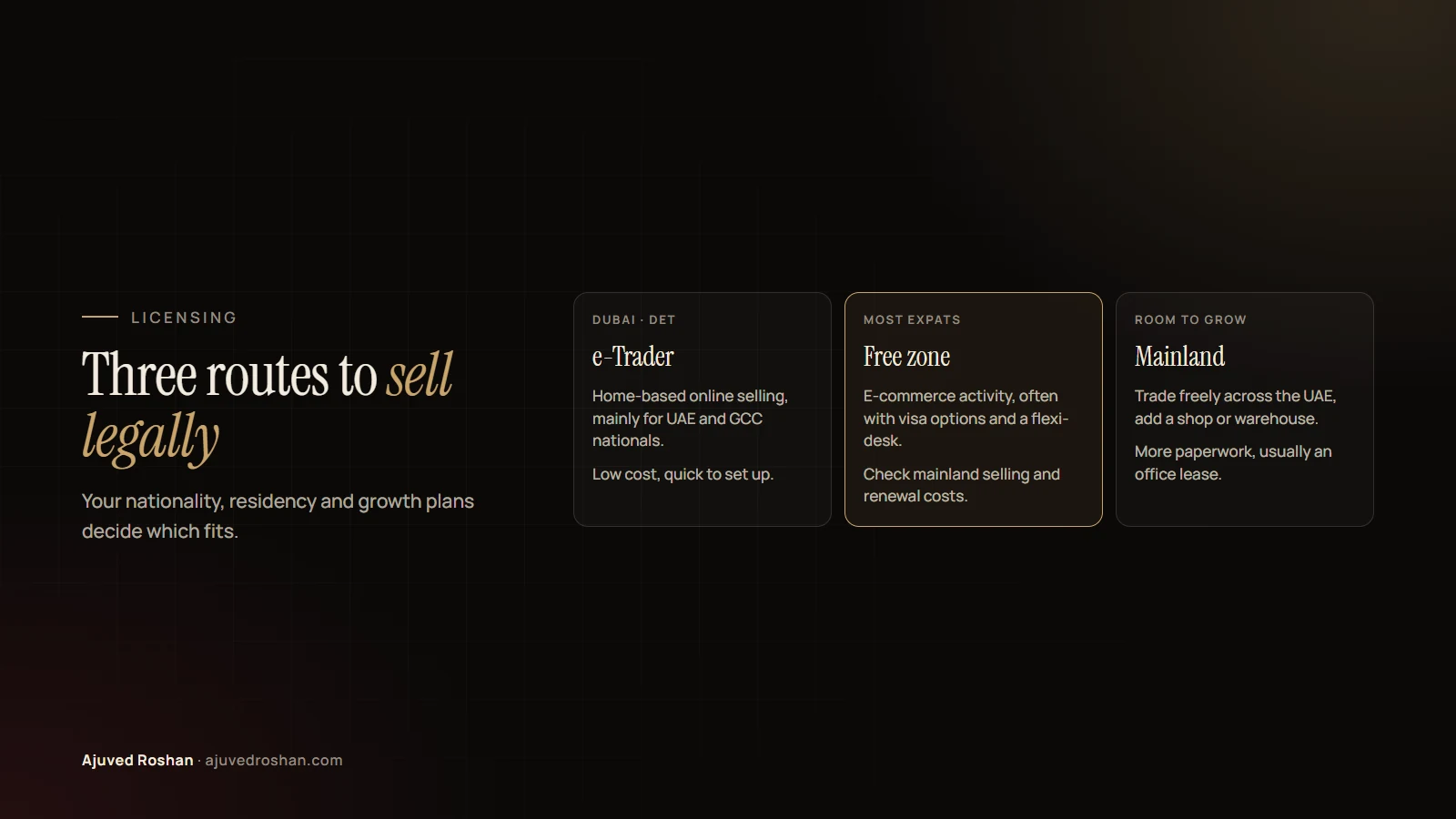
Dubai’s Department of Economy and Tourism offers the e-Trader licence for people who sell online from home, through a website or social media. It’s designed to be affordable and quick to set up, and it’s well known among social media sellers. The important detail is eligibility: it has been aimed mainly at UAE and GCC nationals living in the UAE, and the options for expatriates are more limited and have changed over time. Check the current eligibility and permitted activities on the official Invest in Dubai portal before you plan around it.
Other emirates have their own home-based or online business permits, with their own rules, so if you live outside Dubai it’s worth asking your local economic department what they offer.
A free zone e-commerce licence
This is the route most expatriate founders take. Many UAE free zones offer e-commerce activities, often bundled with options for one or more residence visas and a flexi-desk instead of a full office. Some free zones are built specifically around e-commerce and logistics, while others are general business free zones that include e-commerce among hundreds of activities.
The questions to ask are practical ones. Does the activity cover selling goods online to customers in the UAE mainland, not just abroad? Can you hold stock or use a fulfilment company? How many visas are included, and what are the renewal costs, not just the first-year price? Will local payment gateways and couriers accept a licence from this particular free zone? Get the answers in writing.
A mainland licence
A mainland company licensed by the economic department of an emirate can trade freely across the UAE, rent a warehouse, open a physical shop later and work with government clients. Since 2021, many commercial activities allow full foreign ownership on the mainland, which has made this route far more accessible than it used to be. It usually costs more and needs more paperwork, including a physical office lease in most cases, so it suits founders who already know the business will grow beyond a small online store.
Which route suits which person
| You are… | Often the best fit | Why |
|---|---|---|
| A UAE or GCC national testing an idea from home | e-Trader (if eligible) | Low cost and simple, designed for online sellers |
| An expat with a job, testing on the side | Free zone e-commerce licence | Accessible to expats; check your employment contract first |
| Planning a brand with stock, staff and visas | Free zone or mainland | Room to grow; choose based on where you’ll sell and store goods |
| Planning a shop, warehouse or government work | Mainland | Full freedom to trade across the UAE |
If you’re employed, read your employment contract before you set anything up. Some contracts restrict outside business activity, and some free zones ask for a no-objection letter from your employer or sponsor.
Products that need extra approval
A trade licence lets you trade, but some products need their own approval or registration before they can be sold in the UAE, whoever sells them. As a dropshipper this matters, because the supplier’s listing won’t tell you.
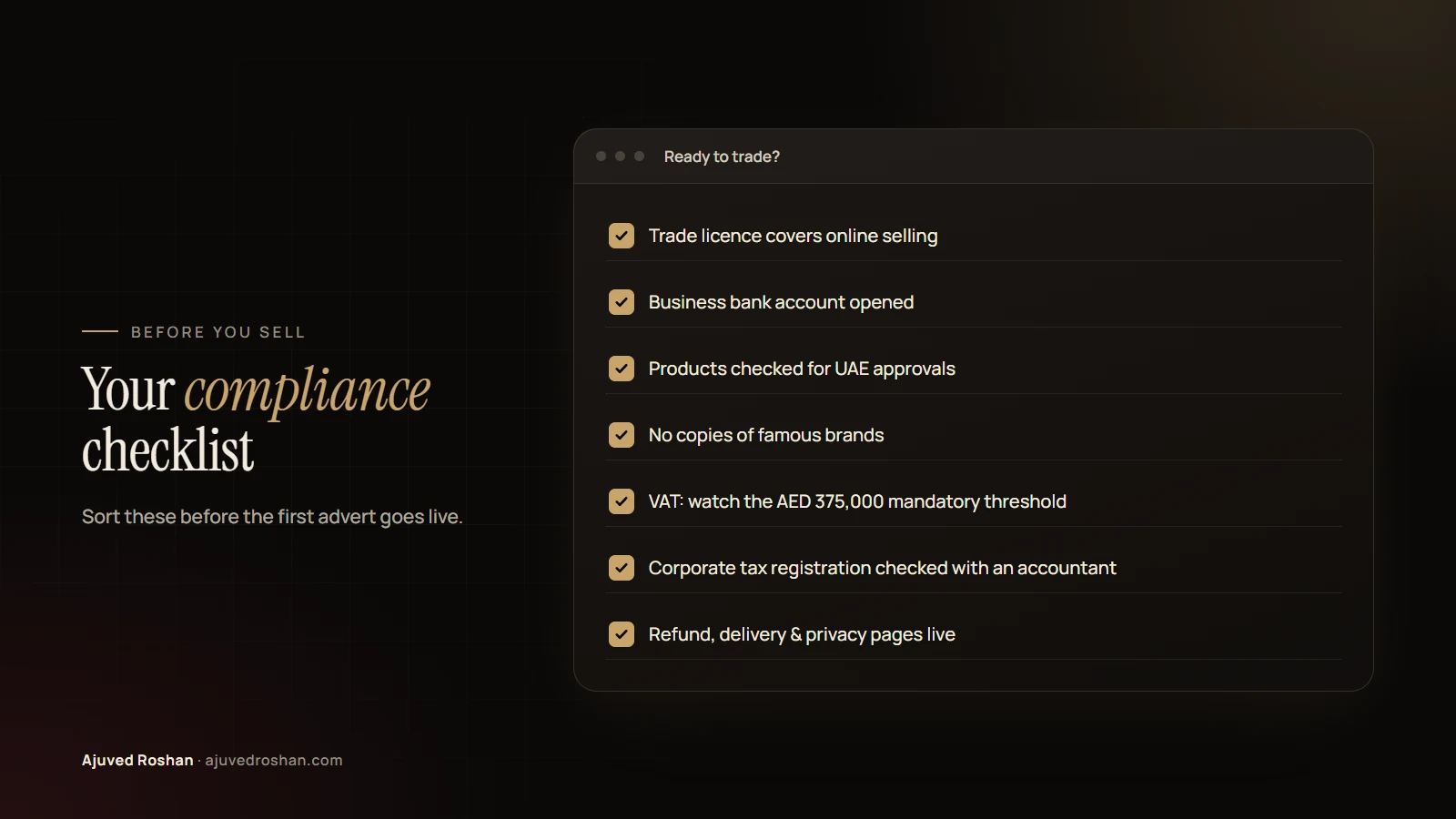
Cosmetics and personal care products are typically registered with the municipality before sale. Medicines, medical devices and many health products are regulated by the health authorities. Food and food supplements have their own rules. Wireless electronics, such as Bluetooth gadgets and Wi-Fi devices, may need type approval from the telecom regulator. Children’s toys and products have safety requirements, and some items such as certain drones and laser devices are restricted. If your product sits in any of these areas, check the requirements before you test it, or pick a different product.
And never sell anything that copies a brand’s name, logo or design. Counterfeits are treated seriously in the UAE, and platforms and payment providers close accounts quickly when they find them.
VAT: when you need to register
The UAE charges VAT at 5%. Registration becomes mandatory once your taxable supplies and imports over the previous 12 months exceed AED 375,000, or if you expect to pass that figure in the next 30 days. You can register voluntarily once they exceed AED 187,500. Registration is done with the Federal Tax Authority through its EmaraTax platform.
Many new dropshippers start below the mandatory threshold, but keep an eye on it from the start. Your sales total counts, not just your profit, so a store with healthy sales and thin margins can reach the threshold sooner than you’d expect. Once registered, VAT affects your pricing, your invoices and your checkout, so it’s easier to set the store up correctly from the beginning.
Corporate tax: the basics
The UAE introduced corporate tax in 2023. Taxable income up to AED 375,000 is taxed at 0%, and income above that at 9%. Registration rules are separate from the rate: companies and other legal entities are generally required to register for corporate tax regardless of how much they earn, and individuals running a business may need to register once their business turnover passes a set level. There are also reliefs for small businesses.
This is exactly the kind of detail that changes, so speak to an accountant once you’re trading. A good accountant costs far less than a penalty for a missed registration or a late return.
A sensible order of steps
Here’s the order I suggest to clients. First, choose your product category and check that it doesn’t need special approval. Second, choose your licence route based on your nationality, residency, visa needs and where you’ll sell. Third, get the licence and open a business bank account. Fourth, apply for your payment gateway and courier accounts, which will want to see your licence and your live store. Fifth, launch, test and keep records from day one so VAT and corporate tax are easy when the time comes.
With the licence sorted, the next decisions are where your products come from and how they reach the customer. I cover those in finding dropshipping suppliers for UAE customers and the full guide to starting a dropshipping business in the UAE.
When you’re ready for the store itself, I build e-commerce websites with the policy pages, invoices and checkout settings that payment gateways and the tax rules expect.
Frequently asked questions
Is dropshipping legal in the UAE?
Yes, as long as you trade under a licence that allows online selling. Payment gateways, couriers, marketplaces and banks will all ask for your trade licence.
Can expats get an e-Trader licence in Dubai?
The e-Trader licence has been aimed mainly at UAE and GCC nationals living in the UAE; options for expatriates are more limited and have changed over time. Check current eligibility on the official Invest in Dubai portal.
Which licence do most expat dropshippers choose?
A free zone e-commerce licence. Check that the activity covers selling to customers in the UAE mainland, the visa and renewal costs, and that local gateways and couriers accept that free zone’s licence.
Sources and further reading
Not sure your store is ready for a payment gateway application? Message me on WhatsApp or send a project enquiry. I reply within one working day.